Your Developer Disappeared. Your Website Doesn't Have To.
Your developer stopped replying. Or changed your passwords. Or shut the whole website down. Either way, you are locked out of something you paid for — and every day it stays that way, your business is invisible.
This is recoverable. In most cases, the way back does not start with the developer at all. It starts with the registrar — because a password in someone else's email does not decide who owns the name. The registrar does.
We take over broken, ghosted, and hostage websites: recover your domain, hosting, and files, audit what is actually there, fix what is broken without breaking what works, and hand everything back to you — in your name, with your logins.
Fastest route is WhatsApp. Tell us three things: your site URL, what broke, and who holds access. That is enough to start.

- Recovery before rebuild
- Written fix list before any fix work
- Handover in your name — always
- No price quoted before we have seen the site
What website rescue is
Website rescue is the recovery of a website you have lost control of — its domain, its hosting, its files, and its logins — followed by the repair of what is broken, and a handover that puts all of it in your name.
Rescue covers:
- A developer who disappeared, stopped replying, or cannot be reached.
- Access withheld — logins changed, never handed over, or held against a further payment.
- A site broken by an update, a plugin conflict, or an untested change.
- A domain or hosting account sitting in someone else's name, or about to expire there.
- Backups, content, and order records that need recovering before anything is rebuilt.
Rescue does NOT cover:
- A working website that simply does not sell — that is a conversion problem, not a rescue. Traffic but no sales? Find the leak
- Forcing a developer to hand over passwords, or breaking into an account — recovery works through proof of ownership, not through guessing or forcing access.
- A brand-new website built from scratch — if recovery is impossible, a rebuild is a separate decision, made with the recovered material in hand, and priced as new work.
The condition that decides everything: rescue can only promise what the evidence supports. We will not promise a full recovery before we see what exists — what survived determines what comes next, and we tell you honestly what survived and what did not before we promise anything.

Rescue triage: what we check first
Before anything is fixed, we triage the situation in this order. Each check ends in a named deliverable you can hold us to — not a verbal reassurance.
1. Access — who can actually get in?
We map every login the site depends on: the website admin, the hosting panel, the domain registrar, and the email tied to them. What you hold, what the developer holds, and what is lost entirely. No logins at all does not end the job — it changes the order of work, because registrar and hosting claims run on proof of ownership, not passwords.
Deliverable: the Access Map — a written list of every account, who holds it, and which recovery route applies to each.
2. Hosting and domain ownership — whose name is it in?
We identify the registrar for your domain and the host the site lives on, and establish whose name each account is in. Domain ownership is decided by the registrar record, not by who holds an inbox password — so this check comes before any argument with the developer. Payment records, registration emails, and business documents are the evidence that moves an account into your name.
Deliverable: the Ownership Record — registrar and host named in writing, account holder identified, and the claim route for each stated plainly.
3. Backups — what still exists, and where?
We hunt for every surviving copy: backups on the old host, platform records, database exports, and any files you hold yourself. What we recover determines what comes next — and a rebuild without this step can destroy the only copies of your content, your order history, and your search rankings. If your email runs through the same hosting, we separate it first, so fixing the website cannot take your email down with it.
Deliverable: the Recovery Inventory — every backup and file source found, what it contains, and what is confirmed lost.
4. Breakage — what is broken, and what must not be touched?
We audit the recovered site before anything is fixed: what is broken, what is outdated, what is a security risk — and, just as important, what is working and must not be touched. Most rescue sites have parts worth keeping. An audit that only lists problems will break the good parts too. The most common breakage cause on WordPress sites is a plugin conflict, followed by a theme update that does not match the installed plugins.
Deliverable: the Breakage Diagnosis — each fault named, each working part named, and the order fixes will go in.
While triage runs — do this, and stop doing this:
Gather what you have: any invoice, contract, email thread, receipt, or screenshot showing you paid for the site and the domain. Proof of payment is the single most useful thing in a recovery. Do not keep clicking “update” on a broken site, do not let anyone “just rebuild it” before the takeover, and do not delete old emails, logins, or invoices — even the ones that look useless are evidence and, sometimes, the only route back in.
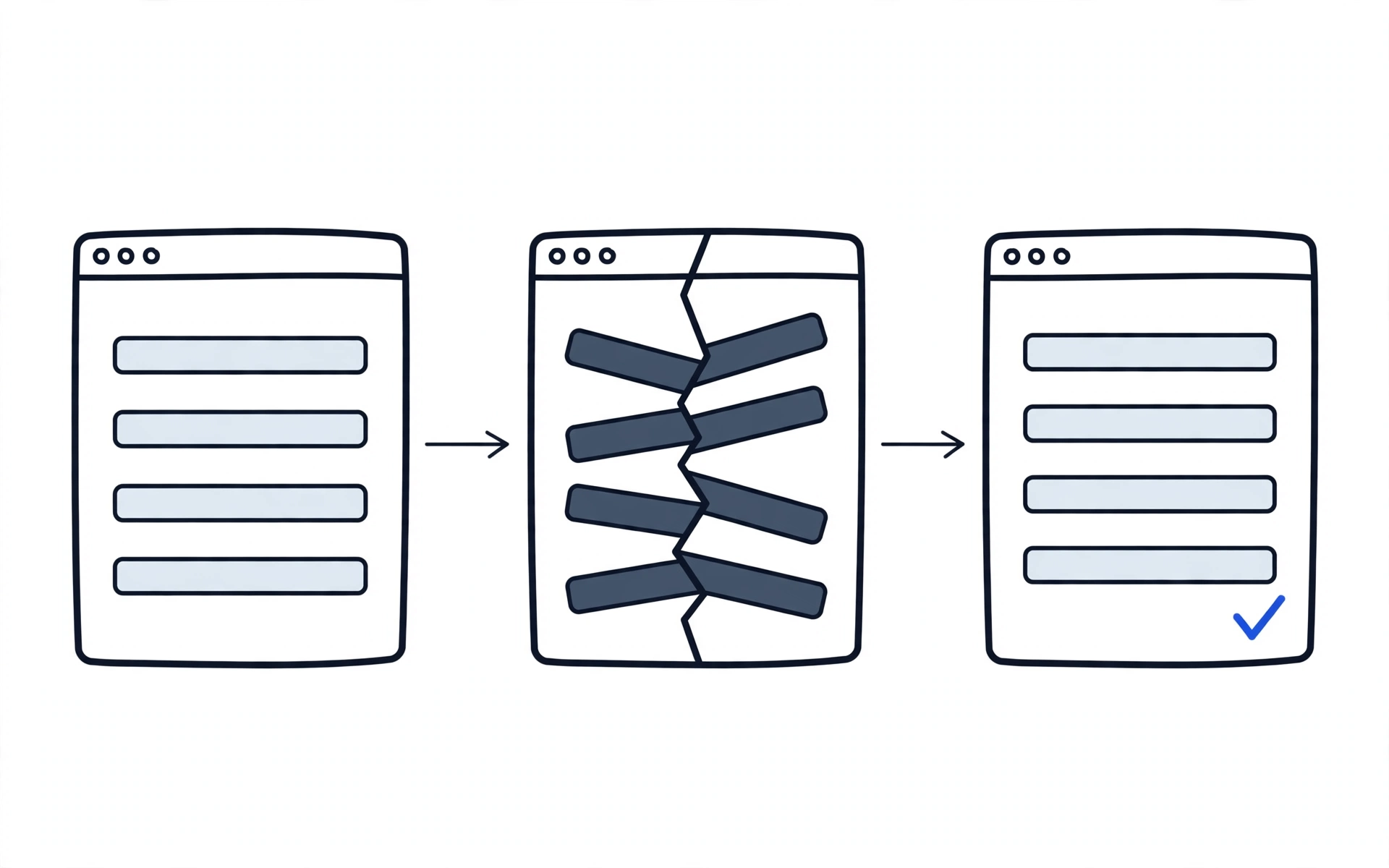
The rescue process: stabilise, recover, fix, hand over
Every rescue follows the same order. The order matters: skipping a step is how recoveries fail.
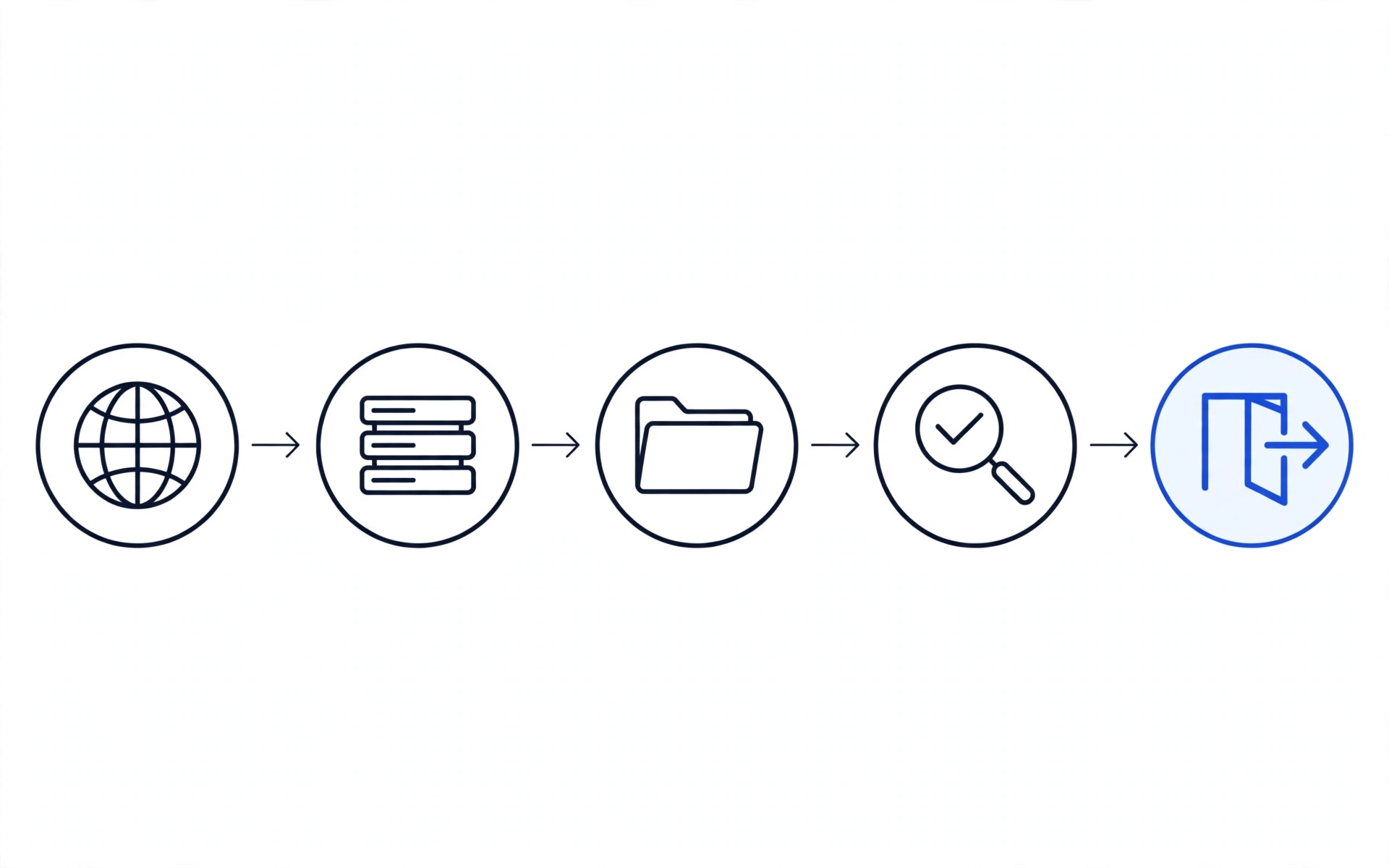
Step 1 — Stabilise.
Secure the name first: move the domain into an account in your name on the strength of your claim, separate your email from the at-risk hosting, and stop the bleeding — no more untested updates, no rebuild before recovery. If a route is closed, we tell you it is closed at this stage, before you spend anything.
Step 2 — Recover.
Recover the site itself from the triage inventory: the files, the database, the content, and the order and customer records where they exist. Then audit what survived — including the traps, like a theme licence in the developer's name or a plugin subscription only they control, which legal ownership alone does not fix. Those get named and replaced with equivalents in your name.
Step 3 — Fix.
You get the audit in writing first: every issue, what fixing it involves, and the order we will fix them in. No work starts on a verbal “we'll sort it.” Fixes then go in one at a time, in the order on the list, with the working parts verified after each step. A rescue that fixes the checkout and breaks the contact form has not rescued anything.
Step 4 — Hand over.
When the site is stable, everything moves into your name — domain registrar account, hosting account, content management logins — with a written record of where everything lives and how to reach it. The rescue is only finished when you can log in to all of it yourself.
Once the site is stable and yours again, the next question may be conversion — and that is a separate diagnosis, not part of the rescue. Conversion Fix Ongoing protection against a repeat — updates tested on staging before they touch the live site, backups kept somewhere you control — is maintenance. WordPress Maintenance
You own it. All of it.
You own your site, your domain, your logins, and your content. HL Growth does not hold websites hostage — not during the rescue, and not after it. That is the entire point of the handover: the rescue is only finished when you can log in to everything yourself, without us, because this must never happen to you again.
- Your domain, in a registrar account in your name.
- Your hosting, in an account you control.
- Your logins — website admin, hosting, registrar — handed over, not held.
- Your content, your files, and your backups, with a written record of where everything lives.
Before and after: what a rescue looks like
[FORMAT MODEL — placeholder: named client + one hard metric + live link + before/after, to be supplied by HL Growth]
[IMAGE: before and after comparison of a rescued website — broken and locked out, then stable and in the owner's name]
Image slot for a later phase — no image created in this phase.
No screenshots, metrics, or client names appear here until HL Growth supplies a real rescue case. Nothing on this page presents another business's results as HL Growth's.
Questions to ask any developer — including us
Ask these before you hand anyone your website. A straight answer is a good sign; evasion is the answer.
| Ask this | A good answer sounds like |
|---|---|
| What if my developer holds the domain or login — can you still get it back? | Yes, often — through the registrar and hosting claims on proof of ownership, not through the developer's inbox. And an honest qualifier: if a route is closed, they say so before you spend anything, and price the rebuild alternative separately. |
| Will the domain, hosting, and logins end up in my name? | Yes — all of them, with a written record of where everything lives. If any account stays in the agency's name, ask why, and walk away if the answer is vague. |
| Will you promise a full recovery before you have seen the site? | No — and that refusal is the honest answer. What survived decides what is recoverable, and nobody knows that before the triage. |
| Do I get the findings in writing before any fix work starts? | Yes — a written fix list: every issue, what fixing it involves, and the order fixes go in. No work on a verbal “we'll sort it.” |
| Will fixing the broken part break something that works? | Fixes go in one at a time, with the working parts verified after each step — and the working parts are named in the diagnosis before work starts. |
| What happens if part of my site cannot be recovered? | They tell you exactly what is lost, what the rebuild alternative is, and what it costs in time — as new work, not dressed up as recovery. |
| How do I make sure this never happens again? | Everything in your name, backups kept somewhere you control, and updates tested on staging before they touch the live site. |
What a rescue costs
From PKR 99,999
Demo placeholder only — not a final price. A rescue price depends on what survived and what did not, so no fixed rescue price is quoted before the audit has seen the site. Anyone quoting one before looking is guessing, and guessing with your money. No monthly retainer is quoted on this page.
Frequently asked questions
I don't have any logins at all. Can my site still be recovered?
Often, yes. Logins are the convenient route, not the only route. Registrar and hosting claims work on proof of ownership — payment records, registration emails, business documents — not on passwords. Tell us you have no logins; that changes the order of work, not whether it is possible.
My developer registered the domain in their name. Who owns it?
Registration in their name makes recovery harder, not impossible. Payment records, contracts, emails, and business documents can still establish your claim with the registrar — and where that route closes, the alternative is securing a replacement domain and redirecting what can be redirected. The audit tells you which situation you are in before you spend anything.
My developer is holding my website hostage and demanding more money. Should I pay?
Do not pay in a panic. Paying does not guarantee access, and it does not fix the underlying problem — your site living in someone else's account. Get an audit first: if the registrar route recovers the domain, the leverage changes entirely. Payment after an audit is a decision; payment before one is a gamble.
How long until my site is stable again?
It depends on what survived and how quickly registrar and hosting support respond — both are outside any agency's control, which is why no honest timeline is given before the audit. What the audit gives you is the shape of the job — recoverable, partially recoverable, or rebuild — so you decide with facts, not hope.
What if my site is unrecoverable?
Then we say so, plainly, at the audit stage — before you spend anything. Some things genuinely cannot be recovered: a database whose only copy lived in an account nobody can open, or files that existed nowhere but a deleted hosting account. In that case the honest options are a rebuild from whatever material survived, or a fresh start with a redirect map protecting what ranking history can be protected. A rebuild is new work, priced as new work — not presented as a recovery that worked.
What drives the cost of a rescue?
Three things: how much survived (a clean recovery is cheaper than a partial rebuild), how many ownership claims have to be fought (registrar, hosting, platform), and how much is broken versus working (fixes go one at a time, verified after each step). That is why no fixed price is quoted before the audit — the price follows the evidence, not the other way round.
Will my Google rankings survive a takeover?
They survive when URLs and content are preserved through the takeover rather than rebuilt from scratch. That is why the process recovers first and rebuilds second: a rebuild without recovery throws away the ranking history along with the content. If a rebuild is unavoidable, a redirect map protects what can be protected — and we tell you plainly what cannot.
My site broke after a WordPress update. Is that a rescue?
Yes — breakage is a rescue case. The fix is the same process: recover a working copy, isolate the conflicting plugin or theme, fix it without breaking the working parts, and then put maintenance in place so updates are tested before they touch the live site again. WordPress Maintenance
Tell us what happened. We'll tell you what's recoverable.
No long form. No obligation. No price quoted before we have seen the site. The free audit gives you a written answer: what is recoverable, what is not, and what the fix list would look like.
What we need from you — three things:
- Your site URL — if the site is still reachable.
- What broke — developer disappeared, access changed or withheld, site broken after an update, domain or hosting at risk.
- Who holds access — you hold all logins, some logins, or none.
What happens after you hit send:
- We reply about your recovery — not with a sales script — and confirm what you have told us.
- We run the triage: access, hosting and domain ownership, backups, breakage.
- You get a written answer: what is recoverable, what is not, and what the fix list would look like.
- If recovery is not possible, we say so at this stage, before you spend anything — and set out the rebuild alternative as separate new work.
WhatsApp conversations open on the fastest human route; the diagnostic form on the contact page covers the same three qualifier fields.